
During normal weather conditions an drainage system could appear to be functioning well. However, a stormy day can reveal weaknesses in the infrastructure of a property. Parking areas flood. Detention ponds overflow too quickly. Access roads are risky. Lower-lying areas can begin to build up water. In many instances, it isn’t just the rain that causes issues. It’s that the place isn’t equipped to efficiently move stormwater gravity alone isn’t enough.
A stormwater lift station becomes essential. They are constructed to gather and drain water away from areas where runoff naturally accumulates, aiding in protecting roads, buildings and utilities as well as outdoor areas. If the project is a industrial, commercial, municipal, or residential, a lift station can be a significant factor in keeping the site functional during and following an emergency.
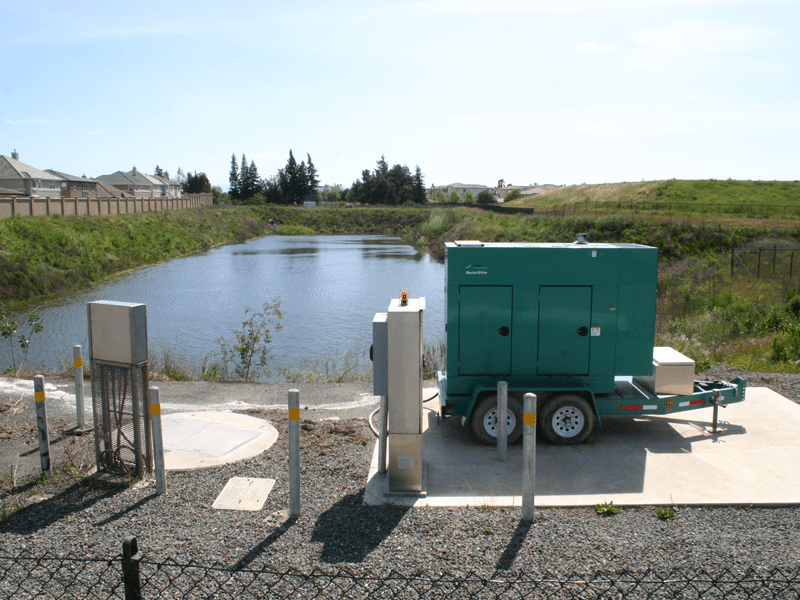
Stormwater management has to be planned to be adapted to the specific site.
Each property manages runoff differently. Retail centers that have large parking areas with paved surfaces behaves in a different way than residential subdivisions. None of these properties will require the same attention that an industrial site or municipal drainage project might. Flow rates, site elevations, detention needs, and discharge conditions all affect how a stormwater management program is designed.
Romtec Utilities is not a company that handles stormwater pumping in a standard manner. Each system is designed according to the specific pumping needs of the site that’s intended for managing flooding, removing detention ponds, regulating runoff on a newly developed property or for supporting a massive municipal drainage network. The most appropriate solution is dependent on how much water must be transported, how fast it needs to move, and where it should be moved.
Stormwater runoff pumps are more than a single pump inside a vault
It requires more than just high-powered machines to construct an efficient runoff pumping station. It functions as a highly coordinated system that seamlessly blends mechanical, structural, electrical and control components to manage heavy stormwater volumes both efficiently and consistently. To ensure that the station performs optimally over its entire lifespan crucial elements like precise size of the pump, strategic well design, advanced control and durable piping, as well as robust power systems, and continuous monitoring must all operate perfectly.
The complete integration of systems allows the most efficient stromwater systems designers stand out. An outstanding design will not only solve problems with drainage for a short time; it also takes a long-term, proactive approach. The top-tier engineering is based on the ease of maintenance in the course of time, the future needs of the site and the best efficiency for operation. It is essential to make sure that the package pumping system is able to perform under extreme weather conditions in the real world instead of relying on idealized assumptions.
The planning process is crucial, regardless of whether you’re dealing with floodwaters that are torrential, or developing municipal systems at high pressure, like booster pump stations that provide pure water, in which failure is not an possibility. Romtec Utilities designs stormwater systems keeping these practical requirements in mind. Their pump stations are tailored to suit a variety of purposes and are backed up by support for starting, staff training, and documentation to aid owners in operating the system effectively after the installation.
Better planning creates better flood protection
A stormwater pump station well-designed can lower risk of flooding, improve accessibility, and also protect the properties around it from water destruction. Pump stations can enhance the site’s resilience by ensuring that runoff from heavy rainfall is handled efficiently and effectively.
It’s easy for people to ignore stormwater infrastructure until it goes down. A reliable stormwater liftstation is the most beneficial investment that a property owner or municipality can make to manage runoff efficiently, instead of passively. With the appropriate design and the appropriate backing, a reliable stormwater management system helps keep the site safe, more functional, and better prepared for the realities of changing weather.