
Imagine two restrooms for public use. Imagine two restrooms in public. The other is situated at the trailhead’s remote location, with a vast open space.
They each provide the same basic service. However when you design them as identical structures, they will not operate in the same manner.
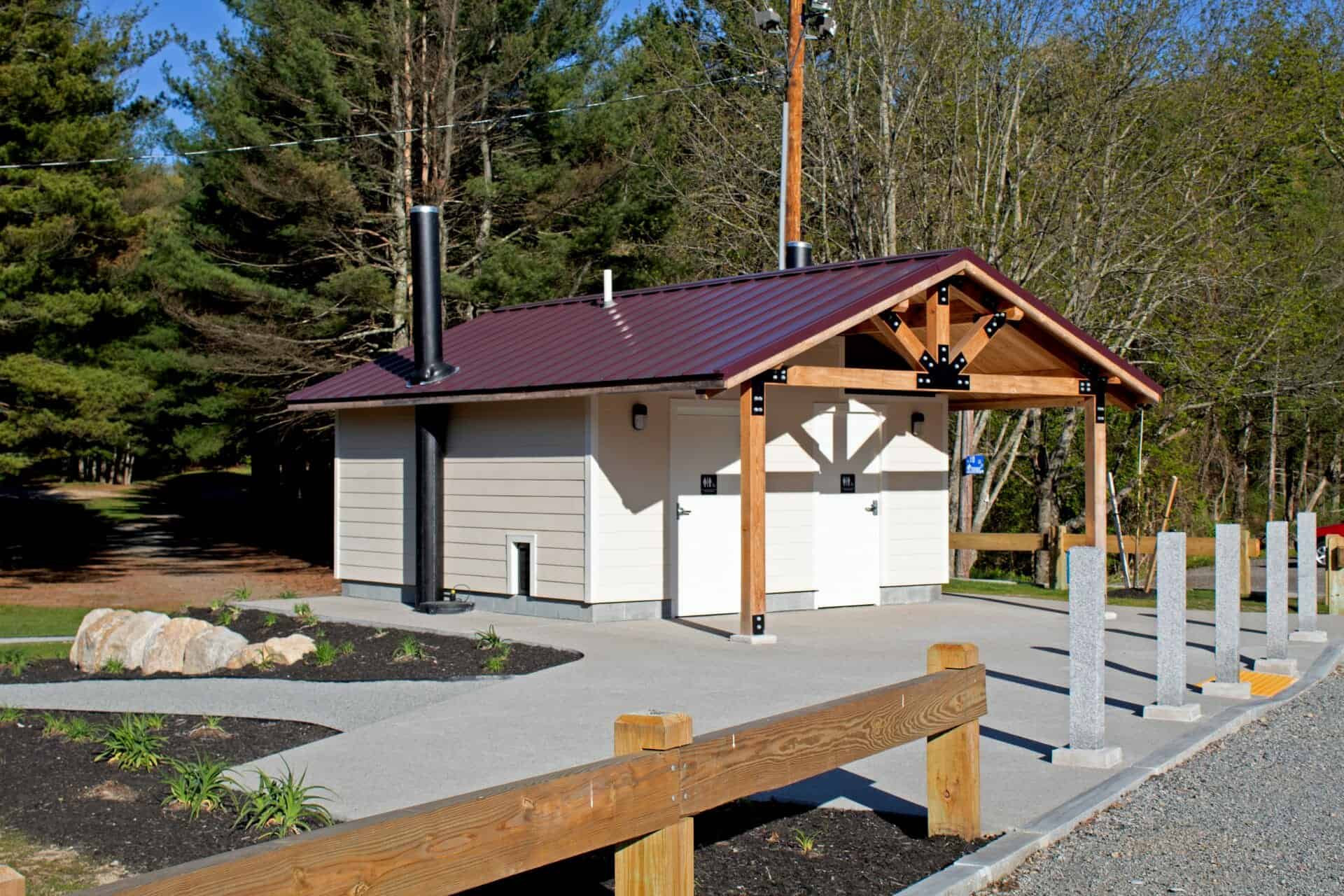
Image credit: romtec.com
The site is the initial stage in constructing a great public restroom. Who can use the facilities? How many persons are permitted to enter at the same time? What amenities are available? How far will visitors have to be able to walk? What style of architecture is surrounded by the structure?
These questions can influence nearly every decision that follows.
Start with the way people move Through the Site
The placement of restrooms should not be thought of as an independent thing from other areas of a park. In a sports facility, visitors may arrive in large numbers during games and events. It is important that the bathroom for a playground is situated at a suitable location for families. It should also be able to integrate into the pedestrian circulation. In a city-centric setting the sidewalk restrooms might need to fit within a narrower footprint and complement nearby streetscape elements.
The building is just one element of the experience. The site of the building can be influenced by several elements, including accessibility, the proximity of activities pathways, entrances, and paths.
Remote sites can cause a new issue
Removing the project from the existing infrastructure and streets. The sewer system of the conventional type may not be available in a scenic spot or in a remote recreation zone such as trailheads, campgrounds or in other places. In appropriate applications, vault toilets provide an alternative that allows restroom facilities to serve locations where traditional plumbing infrastructure may be difficult or impractical.
It alters the conversation about design. Instead of choosing a structure first, design teams examine the existing conditions on the site and decide which bathroom system is appropriate for the site.
Capacity should reflect Real Use
A park located in a tranquil neighbourhood and a complex for sports regionally do not have the same kinds of people who visit. In peak times, demand is essential. An event that seems to be a success on a normal Tuesday afternoon might face different conditions at a tournament, festival, or any other type of community event.
Owners are able to plan their project around the needs of the bathroom, based on its capacity, layout and fixtures, along with accessibility for maintenance.
The versatility of prefabricated park restrooms can be very valuable to organizations that are interested in the building. Instead of requiring the location to follow a particular design, the facility can be customized around the specifications of the project.
Architecture Still Belongs in the conversation
The look of a restroom is important, but it should not be ignored because its function is more crucial. A restroom is a visible part of a landscape that is public. Roof forms, siding, colours fixtures, masonry and other architectural features can aid in connecting it to adjacent concession buildings or pavilions or the natural surroundings the design concept, or even a neighborhood.
Romtec’s customized approach permits project teams to blend different material, colors, shapes and exterior designs rather than being limited to one uniform appearance.
Designing for the Environment, not just the Purpose
Romtec works with park operators as well as landscape architects and contractors to design, supply, and install restroom buildings and other public structures. Its expertise includes building documentation and code requirements, ADA considerations, engineering components, selection of the right component, and construction across the United States.
But, the most important start point is really simple. Don’t begin by asking what restroom building you can build on the spot. Learn about the surroundings, people, and the activities that already exist. Then, design the structure which is a part of it.